
Michigan Conventional Loans: Complete 2026 Guide
Michigan conventional loans are one of the most popular ways to finance a home in Michigan in 2026 — flexible terms, competitive rates, and conforming limits that work for many borrowers statewide. This guide explains how Michigan conventional mortgages work, who qualifies, 2026 loan limits by property type, and how they compare to FHA and other options.
A Michigan conventional loan is a strong fit for buyers and homeowners who want flexible guidelines without government insurance on every loan. In 2026, conventional mortgages remain popular for Michigan borrowers with solid credit and stable income — whether you are buying a primary home, a second home, or planning a refinance. Conventional loans typically require higher credit scores than some government programs, but they can offer long-term savings and more options as you build equity.
Get Your Free Mortgage Quote
Answer a few quick questions and a licensed Michigan loan officer will follow up with your personalized quote — no obligation.
By clicking “Submit”, you consent to receive calls and texts at the number you provided, including marketing by autodialer and prerecorded and artificial voice, and email, from Riverbank Finance LLC about your inquiry and other home-related matters, but not as a condition of any purchase; this applies regardless of whether you check, or leave un-checked, any box above. You also agree to our Privacy Policy and Terms of Use regarding the information relating to you. Msg/data rates may apply. This consent applies even if you are on a corporate, state or national Do Not Call list. This no obligation inquiry does not constitute a mortgage application. To apply now or get immediate assistance, call us at 1-800-555-2098.
Top Benefits of Conventional Home Loans in Michigan
- Competitive Interest Rates: Conventional loans can come with competitive interest rates, especially for those with strong credit scores.
- No PMI with 20% Down: Avoid private mortgage insurance (PMI) by putting down 20% on your home, reducing your overall monthly payments.
- Flexible Loan Terms: Choose from a variety of term lengths (15, 20, 30 years) to suit your financial goals.
- Higher Loan Limits: Conventional loans can offer higher loan limits, which is ideal for purchasing more expensive homes.

What Are the Requirements for a Michigan Conventional Loan in 2026?
To qualify for a Michigan conventional mortgage in 2026, the following criteria are typically required:
- Credit Score: Generally, a score of 620 or higher is needed, with better rates available for those with scores over 740.
- Down Payment: Depending on the loan program, the minimum down payment can be as low as 3%, though putting down 20% eliminates PMI.
- Income: Lenders will assess your income to ensure you can afford the mortgage payments. This includes your salary, any additional income, and debt-to-income ratio.
How Much Down Payment Does a Conventional Mortgage Require?
A conventional mortgage down payment requirement is typically between 3% and 20% of the purchase price. The standard at most mortgage companies is 5% of the purchase price for the down payment requirement, however this number may vary from bank to bank.
At Riverbank Finance, we allow for as little as a 3% down payment on a conventional mortgage to keep cash in your pocket. The Freddie Mac Home Possible Mortgage may be a great fit for first time home buyers with little reserves. Many conventional mortgage programs offer competitive interest rates with 5% down. Many home buyers choose a 20% down payment for a conventional mortgage to avoid PMI.
Michigan Conventional Mortgage Down Payment Options for 2026
- Conventional 97% Mortgage Loan: 3% Down Payment
- Conventional 95% Mortgage Loan: 5% Down Payment
- Conventional 80% Mortgage Loan: 20% Down Payment
How to Apply for a Conventional Home Loan in Michigan
Conventional vs. FHA Loans in Michigan: Which Is Better?
Both conventional and FHA loans offer distinct benefits. While conventional loans are ideal for borrowers with stronger credit and a larger down payment, FHA loans are more forgiving and cater to first-time homebuyers or those with less-than-perfect credit. Here's a quick comparison:
| Feature | Conventional Mortgage | FHA Loan |
|---|---|---|
| Down Payment | As low as 3% | As low as 3.5% |
| Credit Score Requirement | 620+ | 580+ |
| Private Mortgage Insurance (PMI) | Required if down payment is less than 20% | Required for all FHA loans |
| Loan Limits | Higher than FHA | Lower than conventional loans |
The minimum credit score requirements for conventional loans is a general rule of thumb. Fannie Mae and Freddie Mac may accept lower scores if the automated underswriting system approves. FHA may accept credit scores down to 500 with a 10% down payment. For more information on the differences between conventional and FHA loans, see our Conventional vs. FHA Loans page.
Conventional Mortgage Calculator
Curious about what your payments would be if you used a Michigan conventional loan to buy a home? Use our Conventional Mortgage Calculator to estimate total monthly payments. Unlike other online conventional loan calculators, ours includes principal, interest, taxes, insurance and PMI estimates to give you a realistic estimated payment.
How to Avoid PMI on Michigan Conventional Loans
Private Mortgage Insurance (PMI) is a common feature of many conventional loans when your down payment is less than 20%. To avoid PMI, consider the following options:
- Make a Larger Down Payment: Putting down 20% or more can help you avoid PMI altogether.
- Request Lender-Paid PMI: In some cases, lenders may offer PMI at no cost to the borrower, but this typically results in a slightly higher interest rate.
- Consider a Piggyback Loan: A second mortgage can be used to cover part of your down payment, helping you avoid PMI.
New 2026 Conventional Loan Limits: 2026 Michigan conventional conforming financing available up to $832,750 for a 1-unit property (base limit)!
2026 Conforming Loan Limits
Base conforming limits by property type:
| 1-unit | $832,750 |
|---|---|
| 2-units | $1,066,250 |
| 3-units | $1,288,800 |
| 4-units | $1,601,750 |
High-cost area limits go up to $1,249,125 for a 1-unit home.
Check Your Loan Amount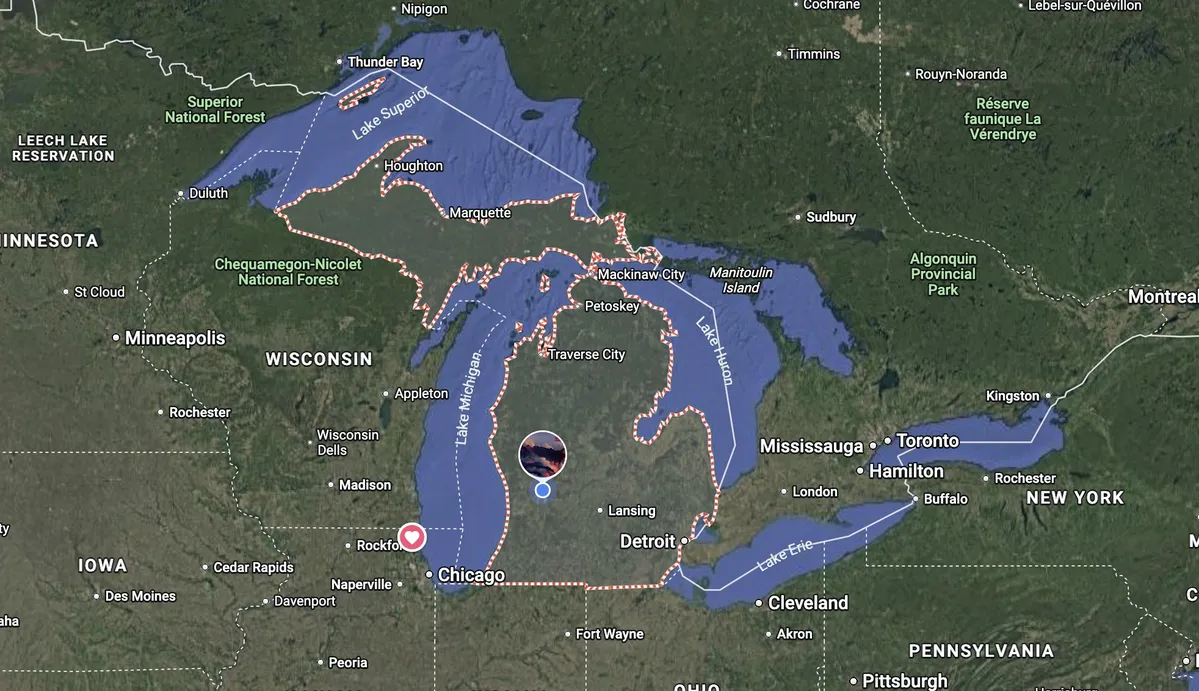
For 2026, Michigan conventional loan limits follow the national conforming baseline for most counties. Michigan borrowers typically use the base (standard) conforming limit of $832,750 for a one-unit, single-family home. Designated high-cost areas nationwide (not the standard for most of Michigan) may use elevated limits up to $1,249,125 for one-unit properties; Alaska and Hawaii also have special statutory provisions.
The baseline maximum conventional conforming loan amount for a one-unit home is $832,750. For the official loan limit lookup, see Fannie Mae's chart: Conventional Loan Limits. Loan amounts above the conforming limit for your county generally require a jumbo loan.
Multi-unit homes have larger conventional loan limits (2026)
Conforming limits are higher for 2–4 unit properties. Base and high-cost ceilings for 2026 are:
- 1-unit: $832,750 (base) / $1,249,125 (high-cost)
- 2-units: $1,066,250 (base) / $1,599,375 (high-cost)
- 3-units: $1,288,800 (base) / $1,933,200 (high-cost)
- 4-units: $1,601,750 (base) / $2,402,625 (high-cost)
Michigan Conventional Loan Limits
Most Michigan counties use the base 2026 conventional conforming limit ($832,750 for one unit). For a detailed breakdown by county, see our 2026 conventional loan limits in Michigan article.
Michigan Conventional Mortgage FAQs (2026 Updates)
Answers to common questions about Michigan conventional loans in 2026 — loan limits, refinancing, PMI, and how to apply — with updates aligned to current conforming limits.
What are the maximum loan limits for conventional mortgages in Michigan?
For 2026, the baseline conventional conforming limit for a one-unit home in most Michigan counties is $832,750. Two- to four-unit properties have higher limits (see the list above). Borrowing above your county's conforming limit usually means a jumbo or non-conforming loan.
Can I refinance with a conventional mortgage?
Yes! A conventional mortgage can also be used for refinancing. You can refinance your current loan to lower your interest rate, change the term of your loan, or even access cash for home improvements.
2026 loan limits
Conforming conventional loan limits are set annually. Higher limits can help buyers in competitive markets; always confirm the limit for your specific county and property type with your lender.
How to Apply for a Mortgage
- Start by contacting a mortgage lender or use an online mortgage application to get pre-approved.
- Submit necessary documents such as income verification, tax returns, and credit history.
- After approval, work with your lender to finalize the loan terms and proceed with purchasing your home.
Still have questions? See all frequently asked mortgage questions or call a mortgage expert at 1-800-555-2098.
Contact Us
If you're ready to apply for a Michigan conventional loan or want more information, call us at 800-555-2098 or apply online today. Our team can help you compare conventional options and choose the best fit.
What Michigan conventional loan clients say
Rated 4.9 out of 5 from 1014 Google reviews of Riverbank Finance LLC.

“Sonya was exceptional wonderful. Timing was great, everything kept moving smoothly right along. The others that helped out extremely respectful and helpful also. I have to say they are the best when you are refinancing or need a mortgage. Communication was above and beyond my expectations. Thank you all so very much. Definitely will use them again and reference them to everyone!!”

“As a first-time homebuyer, I really appreciated how informative and patient Anthony was throughout the entire process. He took the time to explain each step clearly and made sure I felt comfortable and confident in my decisions. Communication was always prompt and helpful, and I consistently felt like I was in good hands. I’d highly recommend Anthony to anyone looking for a knowledgeable and reliable mortgage broker.”

“Anthony Bird was fantastic through our home purchase experience. He was always available for our questions and made sure the process was as smooth as possible and that we knew all our options. This was our second time using him and would recommend!”

“Sonya was AMAZING to work with! I had a challenging situation and she found me a great option for my mortgage, whereas other companies flat out said, “nope, can’t help you.” I closed this week and the entire process was smooth and Sonya was very accessible/responsive to my questions along the way. I am extremely pleased, and thankful, for having found Sonya at Riverbank, for my mortgage.”

“We can’t say enough great things about Michaele! Buying a new home is a huge decision, and throughout the entire process, she made us feel confident, informed, and genuinely cared for. As a family of five preparing to move into our new home, there were plenty of questions and moving pieces along the way. Michaele was always quick to respond, patient with our questions, and willing to go the extra mile to make sure we understood every step. We never felt like just another transaction—she truly had our family's best interests at heart Her professionalism, knowledge, and attention to detail helped make what could have been a stressful experience feel smooth and manageable. Thanks to her guidance, we were able to focus on the excitement of finding the right home for our family. We are incredibly grateful for all of her hard work and would highly recommend her to anyone looking for a mortgage professional who is not only excellent at what she does, but also genuinely cares about her clie”

“Tomas F. is absolutely amazing, and I’m so thankful he was my loan officer. As a first-time homebuyer, I had a lot to learn, and he walked me through every step of the process, taking the time to educate and guide me along the way. There were definitely some stressful moments, but Tomas was always there as my advocate. He prepared my file so thoroughly before underwriting that the processor and underwriter already had everything they needed, making the underwriting phase smooth and surprisingly quick. If rates drop, I already plan to refinance with Tomas. I trust him completely and am confident that he will handle my file with the same care, diligence, and professionalism. He’s not only effective at what he does, but also kind, patient, and genuinely invested in helping his clients succeed. I would recommend Tomas to any homebuyer, but especially to first-time homebuyers. If you’re looking for someone who is trustworthy, patient, diligent, and highly effective, give Tomas a call.”

“Josh was amazing to work with. He went well above and beyond with every aspect of our mortgage approval. He personally cares about his clients. His interactions with us were nothing but professional, helpful, informative, and timely. For our next house, we will definitely choose Josh!”

“I’ve had the pleasure of partnering with Michaele Daugin on several client transactions, and she consistently goes above and beyond for her clients. Michaele is knowledgeable, responsive, and dedicated to making the mortgage process as smooth as possible. Her professionalism, attention to detail, and commitment to exceptional service make her a trusted resource for homebuyers. I highly recommend Michaele to anyone looking for a reliable and experienced mortgage professional.”
Ready for your Michigan conventional loan?
Call us at 800-555-2098 or apply online today — our team can help you compare conventional options and choose the best fit.
Apply Now 800-555-2098