


Conventional Condo Guideline Changes
If you’re buying, financing, or working with condos, things just changed. In March 2026, Fannie Mae dropped Lender Letter LL-2026-03 conventional condo guideline changes — a significant overhaul to conventional condo guideline requirements that affects project reviews, reserve funding, insurance rules, and more. Some of it makes life easier. Some of it makes warrantability harder. And a lot of it has staggered timelines, so knowing what’s effective when is half the battle.
Here’s a plain-English breakdown of every major change — what it is, when it kicks in, and what it means in practice.
Project Review Changes: What’s Getting Stricter and What’s Getting Easier
Fannie Mae condo guidelines are getting shaken up on the project review side. Some loosen the process. Others tighten the screws considerably.
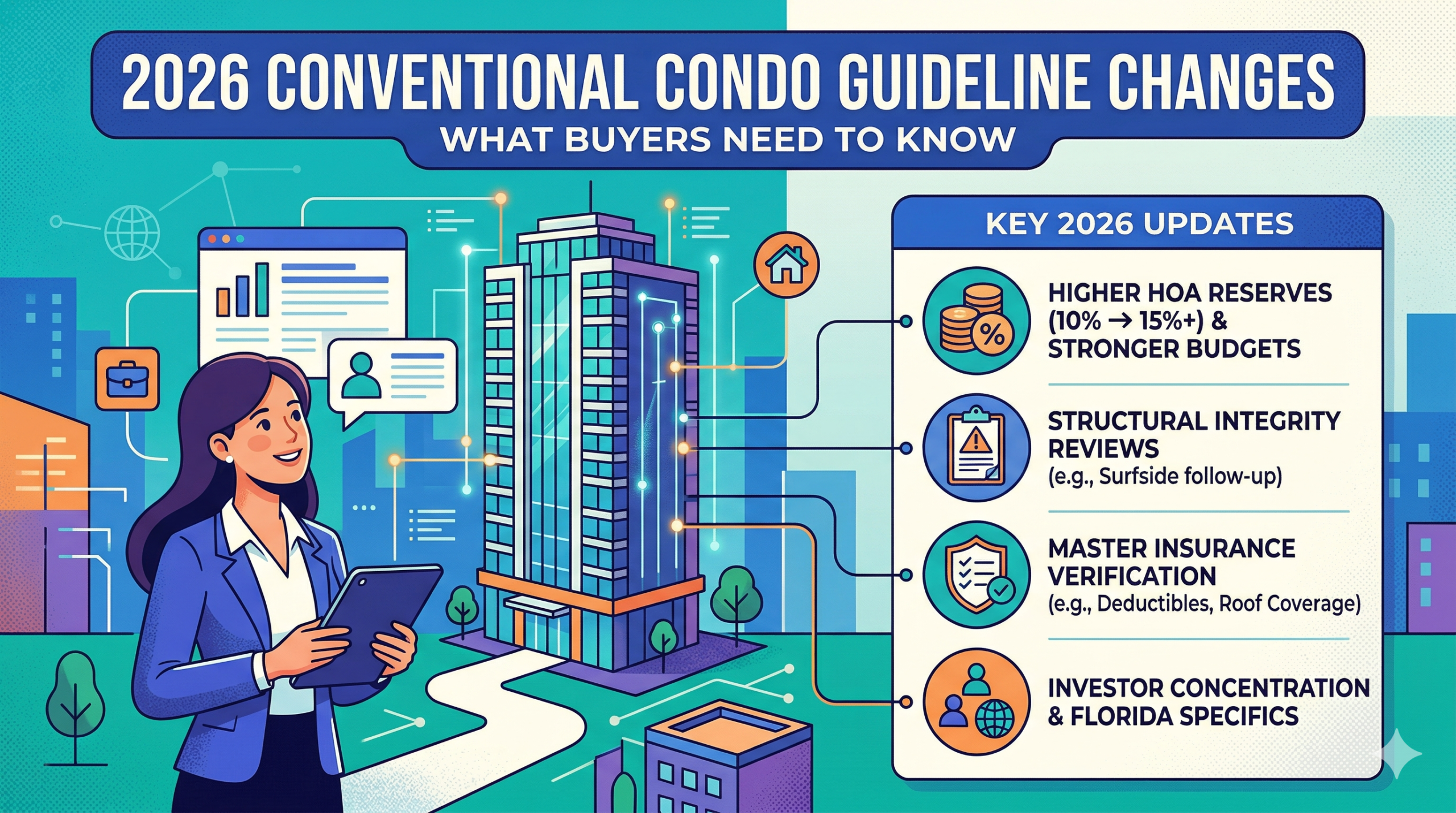
Higher Reserve Requirements (Effective January 4, 2027)
This is the one that’ll sting the most. The minimum reserve allocation for capital expenditures and deferred maintenance is jumping from 10% to 15% of a condo association’s annual budgeted income assessment. That’s a 50% increase in the required reserve contribution — and it applies to Full Reviews on applications dated January 4, 2027 or later.
I’ve had more than a few borrower files where the HOA budget squeaked by at exactly 10% reserves. Under the new rule, those same projects would fail a Full Review unless the HOA raises dues or redirects funds. Expect a wave of condo questionnaires coming back non-warrantable until associations adjust their budgets.
Stricter Reserve Study Rules (Effective August 3, 2026)
If a project uses a reserve study instead of standard budget percentages, the budget must now include the highest recommended reserve allocation from that study. The “baseline funding method” — which allowed cash balances to approach zero — is gone. Mandatory for applications on or after August 3, 2026.
Translation: HOAs that have been running lean on reserves using the baseline approach will need to hold significantly more cash on hand. That likely means higher assessments for unit owners — which can affect borrower qualification downstream.
Expanded Project Review Waivers (Effective Immediately)
Good news here. The Waiver of Project Review now applies to new and established projects with up to 10 units — expanded from the previous limits. Projects with 5–10 units cannot be part of a master association. This is live now, so you can use it today.
For smaller condo buildings, this is a meaningful time-saver. Instead of pulling full budgets, questionnaires, and HOA docs, you can waive the review outright — as long as the project meets all applicable insurance requirements and there are no critical repairs or evacuation orders in place.
Limited Review Is Gone (Mandatory August 3, 2026)
This one’s a big deal. The Limited Review process for established projects is being completely retired. Going forward, established projects must go through a Full Review — or qualify for a Waiver of Project Review.
Limited Review was the lighter-touch path. Less documentation. Fewer HOA checks. Faster processing. Losing it means that files that previously sailed through are now subject to full scrutiny: complete budgets, HOA questionnaires, the works. Lenders can retire Limited Review immediately, but must for all applications dated August 3, 2026 or later.
Investor Concentration Limits Retired (Effective Immediately)
The 50% investor concentration limit for established projects undergoing a Full Review is gone. This is effective immediately. Worth noting: presale requirements for new projects are unchanged, so this relief applies specifically to established projects.
This is great news for investment-heavy buildings. Condo projects where more than half the units are renter-occupied used to be a financing obstacle. That hurdle just got removed.
PERS Retired for Florida (Effective Immediately)
New or newly converted projects with attached units in Florida no longer need to go through the Project Eligibility Review Service (PERS). Lenders can now run these under the standard delegated Full Review process.
PERS was a major bottleneck for Florida originations — especially in a market that already has its hands full with insurance challenges. Retiring it streamlines things considerably for lenders working with Florida condo clients.
Property Insurance Changes: Real Relief With Some New Rules
Insurance has been a sore spot for condos across the country. Rising premiums and limited availability pushed Fannie Mae to loosen several requirements that were becoming nearly impossible to document. Here’s what changed.
Coverage Sufficiency (1-4 Units & Master Condos) — Effective Immediately
Three requirements are retired, effective now:
- Replacement Cost Documentation: Lenders no longer need to specifically document the replacement cost value to verify policy coverage. Master policies must simply equal at least 100% of the estimated replacement cost — but you don’t have to document the calculation in detail.
- Roof Coverage: Roofs no longer have to be insured on a replacement cost basis. Actual cash value is now acceptable. This alone will clear a lot of conditions in markets where replacement cost roof coverage is nearly unavailable.
- Inflation Guard: The requirement for master policies to carry inflation guard coverage is retired. Another administrative headache gone.
For anyone who’s spent time chasing down insurance conditions — documenting replacement cost calculations, tracking down inflation guard endorsements — this is a genuine relief. Those conditions can now be cleared much faster.
Master Policy Deductibles & HO-6 Requirements (Mandatory July 1, 2026)
This section adds some new structure around deductibles and unit owner policies:
- Master Deductible Cap: The maximum per-unit deductible on a master property insurance policy is now capped at $50,000.
- When HO-6 Is Required: A borrower needs an individual unit owners policy (HO-6) if the master policy doesn’t cover interior improvements, OR if the master policy carries a per-unit deductible.
- HO-6 Coverage Amount: Must cover the greater of the amount needed to restore the unit’s interior, or the master policy’s per-unit deductible.
- HO-6 Deductible Limits: The maximum deductible on the individual unit policy is the greater of 5% of the coverage amount or $2,500.
These rules create a clearer framework — but lenders will need to be more diligent about asking whether the master policy has a per-unit deductible and whether the borrower’s HO-6 is structured to match it. Mandatory compliance starts July 1, 2026.
New Servicer Requirements: Annual Insurance Reminders
Mortgage Servicers now have two new minimum requirements. They must monitor policies at renewal — confirming rating, deductible, covered perils, and replacement cost coverage. They also must send borrowers an annual reminder about their responsibility to maintain property insurance and review their coverage with a provider.
It’s a modest administrative addition, but one more task on the servicer checklist. It’s worth updating workflows and communications calendars now so it doesn’t get missed.
The Upside of Conventional Condo Guideline Changes
Let’s be clear about where lenders and borrowers actually benefit:
- Faster insurance clearances. Retiring the documentation requirement for replacement cost value and dropping inflation guard means fewer conditions and less back-and-forth with HOAs and insurance agents.
- Roof coverage relief. Allowing actual cash value for roofs is a significant win for associations — especially in markets where replacement cost coverage is prohibitively expensive or outright unavailable.
- Smaller buildings, less paperwork. The expanded waiver now covers projects up to 10 units. That’s fewer full reviews for smaller developments — less time, less documentation, faster closings.
- Florida gets a normal path. Retiring PERS for Florida attached condos eliminates one of the biggest friction points for lenders doing business in that state.
- Investor-heavy buildings now financeable. Removing the 50% investor concentration limit for established projects opens up a meaningful segment of the condo market that was previously difficult to finance.
The Downside of Conventional Condo Guideline Changes
The improvements come with real tradeoffs. Here’s where things get harder:
- Higher reserves will shrink the warrantable pool — at least temporarily. Many established projects will fail a Full Review under the new 15% reserve requirement. Until HOAs raise dues or adjust their budgets, those buildings won’t qualify for conventional financing. Borrowers will feel this directly.
- Reserve study rules will push HOA costs higher. Disallowing the baseline funding method and requiring funding at the highest recommended level from reserve studies means HOAs have to hold more cash. That often means assessment increases — which affects what a borrower can afford in ongoing costs.
- No more Limited Review means more work on established projects. Files that used to flow through with minimal documentation now require full HOA questionnaires and budgets. Expect longer timelines and more borrower follow-up on previously easy transactions.
- Servicers have a new annual task. Sending annual insurance reminders to borrowers is a small but real addition to the servicing burden.
Key Dates at a Glance
- Effective Immediately: Project Review Waiver expanded to 10 units; investor concentration limit retired; PERS retired for Florida; insurance coverage sufficiency changes (replacement cost documentation, roof ACV, inflation guard)
- August 3, 2026: Limited Review retired; enhanced reserve study rules mandatory
- July 1, 2026: New master deductible cap and HO-6 rules mandatory
- January 4, 2027: 15% minimum reserve allocation mandatory for Full Reviews (The most new requirement)
What to Do Right Now
If you’re a mortgage lender or real estate agent, start reviewing your condo pipeline for any projects that are currently relying on Limited Review — those files need a plan before August. Pull the budgets on your Full Review files and flag any HOAs sitting at or near 10% reserves. They’ll need to be revisited when the new threshold kicks in.
If you’re a borrower considering getting a condo loan, ask your loan officer to run a quick warrantability check early in the process. A building that cleared a review six months ago might not clear one today — especially if the HOA hasn’t adjusted its budget yet.
And if you’re an HOA board member? You’ll want to be talking to your reserve specialist and your insurance agent now, not in December.
These changes are significant, but they’re not unworkable. The lenders and borrowers who adapt fastest will have the clearest path to closing. Reach out if you want help navigating a specific file or understanding what these changes mean for your situation.
Ready to take the next step? Contact a local mortgage broker today at 800-555-2098 and put this guide to work for you!
For more resources visit the Fannie Mae Condo Guideline Publication.